
Do not copy the guest-room spec into a wet room
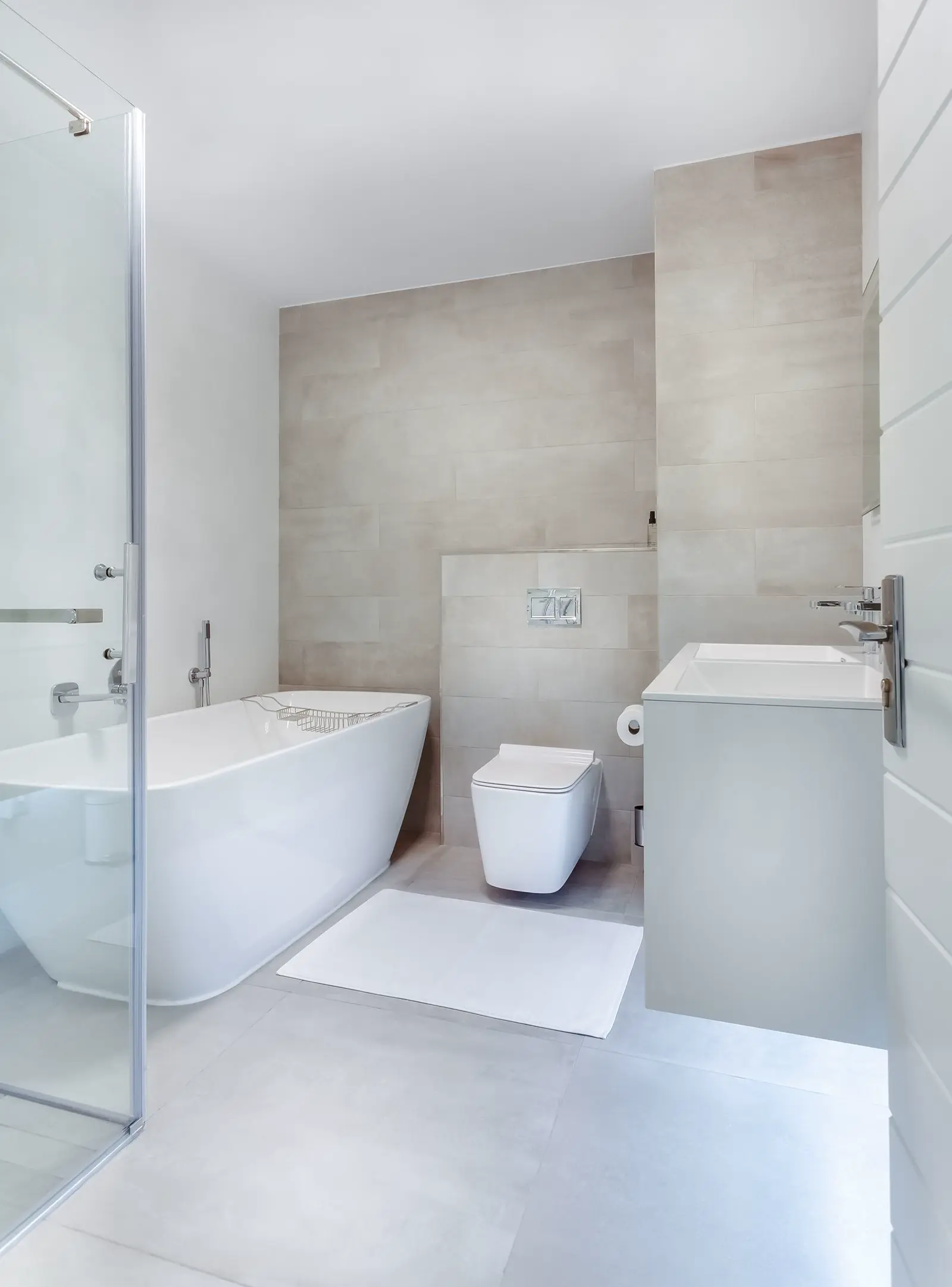
Carpet and dry-area LVT are the wrong products next to a pool, in a commercial kitchen, in a laundry, and usually in a hotel bathroom. Water, soap and cleaning chemicals change the brief. Hotel wet area flooring is a different system: typically welded sheet vinyl, sometimes a specialist wet-area tile, with a published slip rating from the manufacturer.
What we will not do on this page
We will not invent a pendulum number, a ramp class, or a laboratory name. Those belong on the product data sheet you are actually buying. If a contractor quotes a rating without naming the product and the condition (wet, barefoot, shod), ask again.
Questions that belong in the brief
- Is this zone barefoot wet (pool, spa, some bathrooms) or shod wet (kitchen, laundry, plant)?
- What chemicals does housekeeping or the kitchen actually use?
- Do you need coved skirting and welded seams for hygiene, or a straight skirt?
- How long can this zone stay closed? A pool surround is not a one-night bathroom.
- Where does water get taken off before it hits the corridor? Entrance matting is part of the wet-area conversation.
Subfloor and occupied install
Vinyl fails on a damp or uneven slab. Moisture checking and levelling are part of the same job as the cover. In an occupied hotel, wet zones are usually released floor by floor or as a closed pool window — see replacing floors without closing the property.
To brief a wet-area package, use the quote form and say bathrooms, kitchen, laundry or pool. Related: hotel vinyl flooring.
What slip rating should a hotel pool surround have?
Ask for a product with a published wet rating suitable for barefoot wet areas, installed to the manufacturer’s system. We will not invent a number here. Your specifier or insurer may already nominate a threshold.
Is a timber-look LVT safe in a bathroom?
Most dry-area LVT is the wrong product for a constantly wet bathroom or pool edge. Use a wet-area vinyl with welded seams and a published wet rating.